-04.png?width=50&height=50&name=Encode_icon%20(coloured)-04.png)
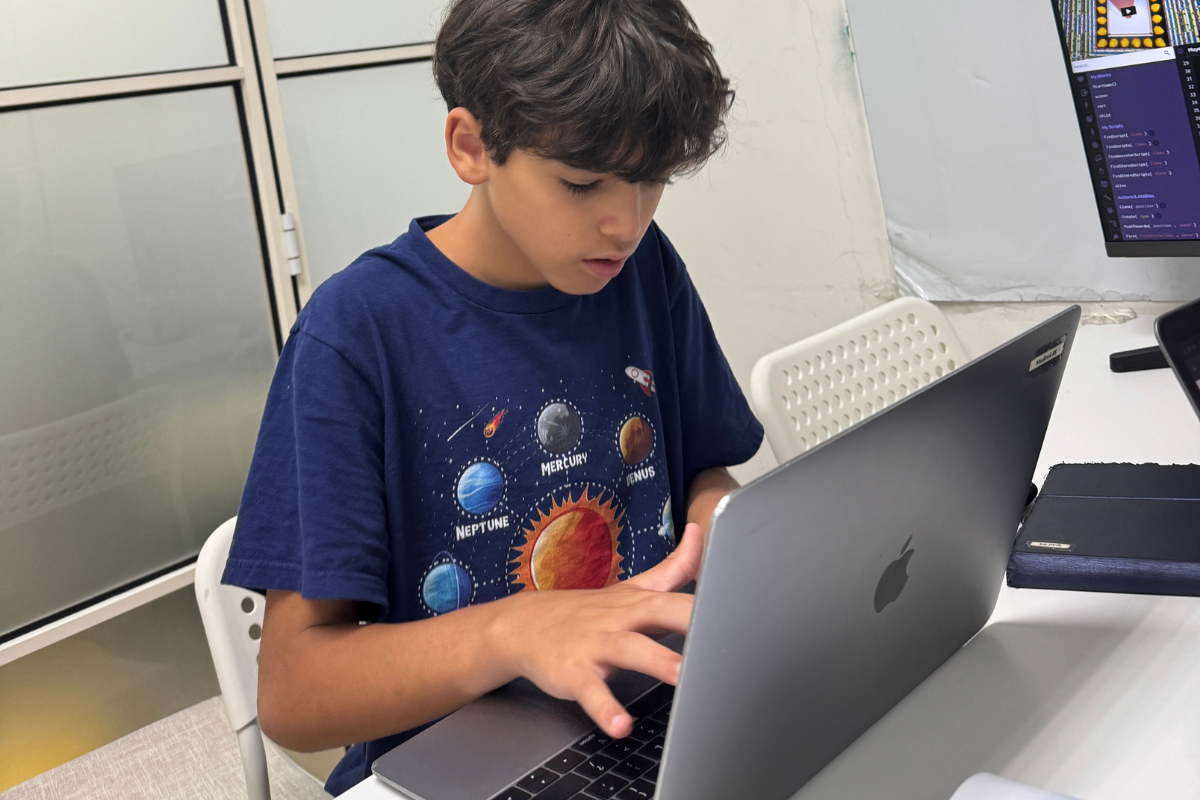
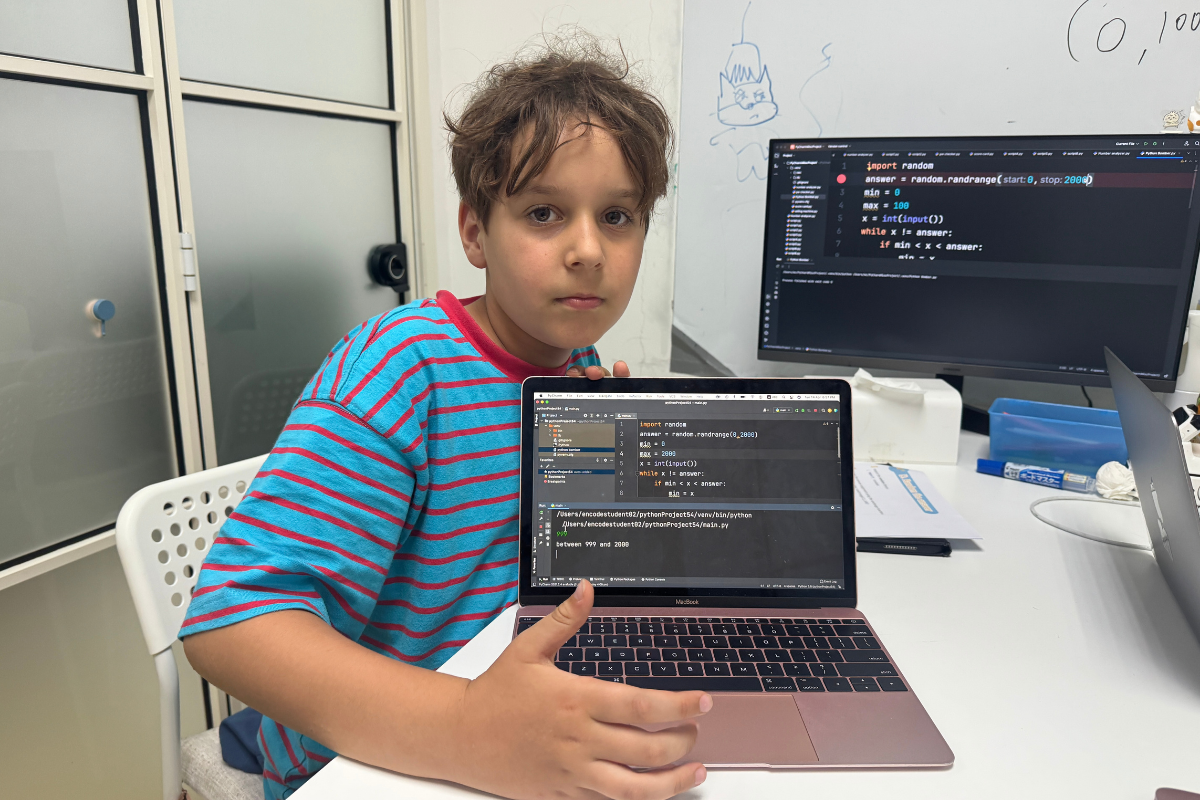
If you learned computer programming twenty years ago, you likely wrote code in languages like Pascal, BASIC, or early C++. Fast forward to today, and languages like Python, Swift, and JavaScript dominate the tech world. In five years, AI assistants will likely render many current syntax conventions entirely obsolete.
This rapid evolution creates a common dilemma for Hong Kong parents:
“If programming languages change so fast, how do I make sure my child isn’t learning skills that will be useless by the time they graduate?”
The answer lies in understanding the difference between syntax and logic. Syntax is simply the grammar of a specific coding language. Logic is the universal problem-solving engine behind all technology.
1. Syntax is the Vocabulary; Logic is the Mindset
Think of programming languages like human languages. Spanish, Mandarin, and French all use different words and grammar rules (syntax), but the core human concepts of thought, emotion, and reasoning (logic) remain identical.
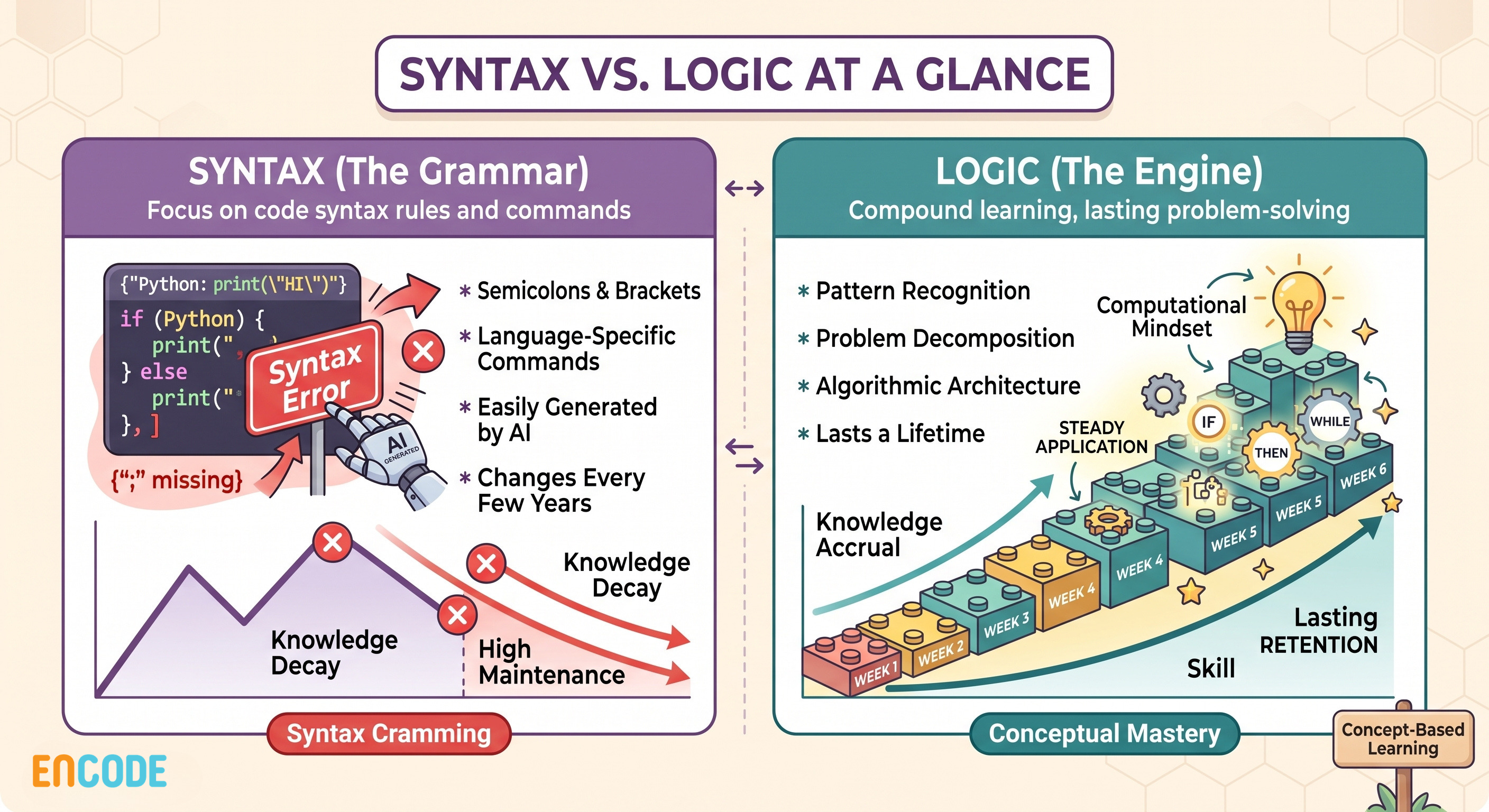
When traditional coding centers focus on rote memorization, they teach kids to memorize language syntax. If that language goes out of style—or if an AI generates the syntax automatically—the child gets stuck.
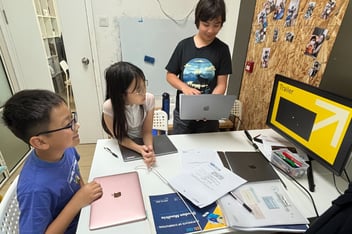
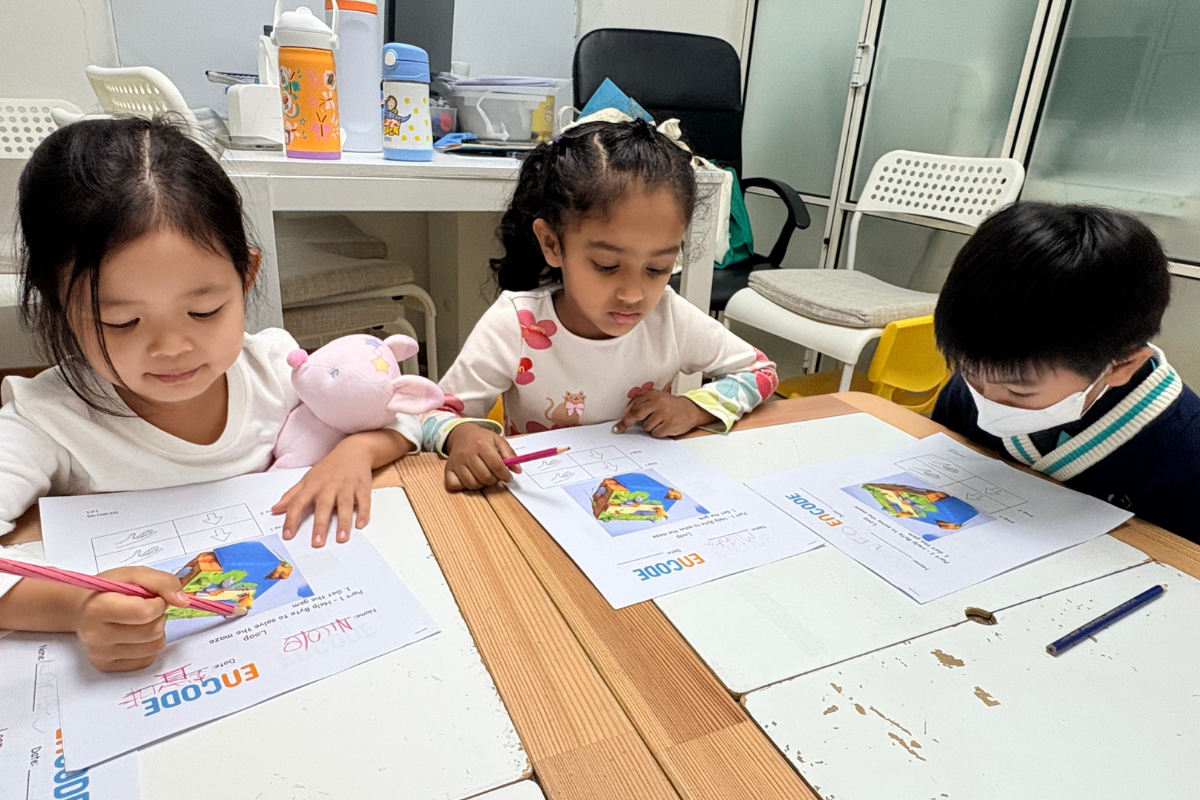
At Encode Education, we teach Concept-Based Learning. By teaching children (Ages 3–16+) how to break complex problems into logical steps, they learn the universal rules that govern all technology. Once a child understands how a loop or conditional statement works conceptually, they can apply that same logic whether they are coding in Python, Scratch, or directing a future AI tool.
2. The Danger of Rote Learning in the Age of AI
Generative AI can now write error-free syntax in milliseconds. If a child’s tech education is built purely on memorizing code commands, they are competing directly with AI—a battle human memory will always lose.
However, AI cannot independently invent system architectures or understand the nuanced "why" behind a human problem.
When your child masters computational concepts:
- They become Project Architects: They don't just type code; they design solutions.
- They adapt effortlessly: Switching to a new technology feels like changing tools in a toolbox rather than relearned from scratch.
- They debug with calm confidence: When something breaks, they analyze the logical flaw rather than panic over missing punctuation.
3. Future-Proofing Your Child’s Cognitive Potential
Technologies will rise and fall, but the ability to analyze a system, recognize patterns, and structure logical workflows will never go out of style. Whether your child grows up to become a tech founder, a surgeon, an artist, or an entrepreneur, computational thinking is the ultimate transferable skill.
We don't teach children to be passive coders who follow instructions. We empower them to be active creators who understand how the world is built.
Build a Mindset That Lasts Forever
Give your child an education that never goes out of date. Experience our Concept-Based Learning model firsthand at Encode Education.
.png?width=352&name=Untitled%20design%20(2).png)